From AI Ambition to Operational Execution
AI transformation is about embedding intelligence into how work gets done. That is where AI creates value. At iExcel, we help organisations adopt AI where processes are clear, decisions are well-defined, and accountability exists. That is where AI creates value.
We focus on integrating AI into real operational workflows: decision support, task automation, knowledge retrieval, and execution enablement. When done properly, AI reduces friction, shortens cycles, and improves consistency by supporting teams with reliable, context-aware systems.
See how this applies to your business >>Contact us<<
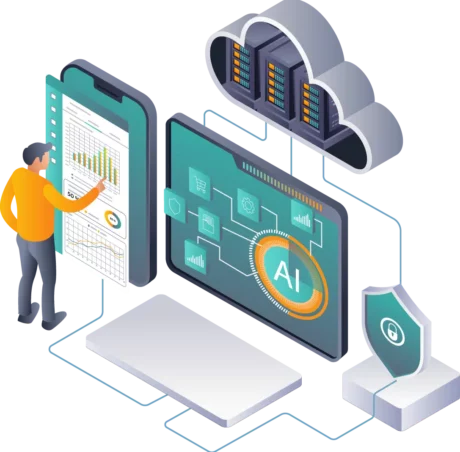
Why AI Initiatives Fail
Tools are deployed without clear use cases
Teams are not trained to use AI effectively
AI remains in pilots, not embedded in operations
Most organisations experiment with AI. Few make it work in operations.
How we turn AI into Operational Systems
Define workflows & decision points
We help you identify where AI creates value across tasks and decisions.
Deploy and integrate into systems
We structure workflows to integrate AI effectively into your operations.
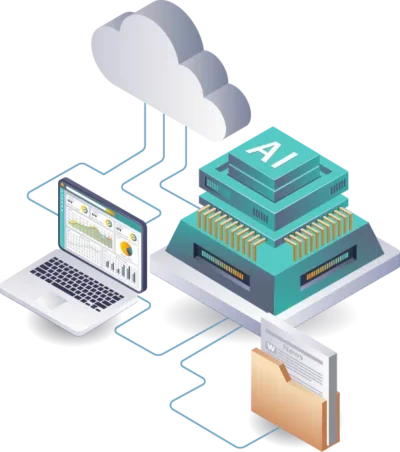
Design AI-enabled processes
We embed AI into your existing tools and infrastructure.
Ensure adoption and governance
We drive usage while maintaining control, security, and oversight.
AI only creates value when embedded into how work gets done.
AI Agents & Workflow Automation
We design and deploy AI agents as structured workflows that support tasks, decisions, and execution—integrated directly into your systems.
These workflows combine AI with your data, rules, and existing tools (CRM, ERP, knowledge bases) to operate reliably and enhance productivity—while keeping humans in control.
From advisory to deployment, we help organisations move from AI experimentation to operational systems that are secure, scalable, and effective.
This ensures AI is embedded into real operations.
Discuss your AI use cases >>Contact us<<
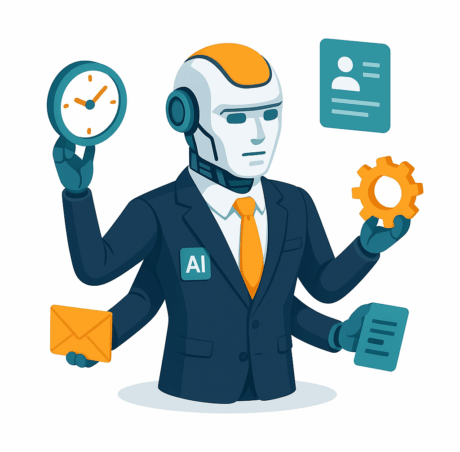
What You Get
AI embedded into real workflows
Faster decision-making and execution
Reduced manual work and inefficiencies
Scalable systems across teams
Our AI Development Services

AI Strategy & Opportunity Identification
We work with leadership teams to identify where AI can support decisions, execution, and operational performance. Opportunities are prioritised based on business impact, feasibility, and organisational readiness.

Process & Workflow Design Strategy
We define the processes, decision points, and responsibilities where AI will be embedded. Clear workflows provide the structure required for AI to operate reliably and deliver consistent outcomes.

Data Readiness & Governance
We assess data availability, quality, and access rules, and establish governance frameworks to ensure AI solutions operate securely, responsibly, and in line with organisational standards.

AI Agent & Workflow Automation
We design and deploy AI agents as automated workflows that retrieve information, prepare outputs, validate inputs, and support decisions within defined boundaries and permissions.

Enterprise Integration & Deployment
We integrate AI agents with your existing systems — including CRM, ERP, document repositories, and internal knowledge bases — ensuring seamless adoption across teams and functions.

Adoption, Training & Continuous Improvement
We support teams through training, change enablement, and performance tracking, refining AI behaviours over time to ensure sustained value and alignment with evolving business needs.
OUR AI TRANSFORMATION PROCESS

STRATEGIC ALIGNMENT

PROCESS & WORKFLOW DESIGN

DATA & SYSTEM READINESS

AI AGENT & AUTOMATION DEPLOYMENT

ADOPTION & CONTINUOUS IMPROVEMENT
We start by clarifying business objectives and identifying where AI can support decisions, execution, and operational performance. Use cases are prioritised based on impact, feasibility, and organisational readiness.
We work with your teams to map existing processes, decision points, and responsibilities. Clear workflows provide the structure needed for AI to operate reliably and deliver consistent outcomes.
We assess data availability, quality, and governance, and prepare integrations with your core systems such as CRM, ERP, and internal knowledge bases to ensure AI agents operate with accurate and controlled information.
We design and deploy AI agents as automated workflows, combining language models with business rules, permissions, and system integrations to support day-to-day operations and decision-making.
We support teams with training, usage monitoring, and performance measurement, refining AI behaviours over time to ensure sustained value and alignment with evolving business needs.
Ready to revolutionize your business? Leverage our custom software development services, and experience seamless solutions tailored to your needs.
HOW WE MANAGE PROJECTS
SCRUM / AGILE METHOD
Scrum is an agile project management framework that emphasizes collaboration, flexibility, and iterative development. It involves breaking down complex projects into smaller, manageable tasks called "sprints." Each sprint typically lasts 1-4 weeks and includes planning, daily stand-up meetings, development, testing, and review. The Scrum team, consisting of a product owner, Scrum master, and development team, works together to deliver incremental value at the end of each sprint. The framework promotes adaptability, transparency, and continuous improvement through regular feedback and retrospectives. By embracing Scrum, organizations can enhance productivity, foster teamwork, and respond effectively to changing requirements in a dynamic business environment.

ADVANTAGES OF USING THE AGILE METHODOLOGY FOR CUSTOM SOFTWARE DEVELOPMENT

INCREASED FLEXIBILITY
Agile methodology allows for greater flexibility and adaptability throughout the development process. With Agile, projects are broken down into smaller increments called sprints, allowing teams to adjust priorities and incorporate changes based on client feedback or evolving requirements. This iterative approach promotes collaboration, ensuring that the software aligns with the client's evolving needs. By embracing change and maintaining flexibility, Agile empowers teams to deliver high-quality software that meets client expectations while keeping pace with the dynamic business landscape.

EASY AND CONTINUOUS DELIVERY
Agile promotes the early and continuous delivery of working software. Rather than waiting until the end of the development cycle to present a complete product, Agile emphasizes delivering functional software at regular intervals. This enables clients to provide feedback, validate functionality, and make adjustments throughout the development process. By incorporating frequent iterations and feedback loops, Agile ensures that the software meets user requirements and aligns with business objectives. Early and continuous delivery allows for faster time-to-market, mitigates risks, and enhances customer satisfaction.

COLLABORATION AND TRANSPARENCY
Agile methodology fosters collaboration and transparency among team members, stakeholders, and clients. Cross-functional teams work closely together, promoting open communication, knowledge sharing, and collective problem-solving. Agile practices such as daily stand-up meetings, sprint reviews, and retrospectives encourage regular interaction and transparency. This collaborative environment ensures that all stakeholders have visibility into the project's progress, challenges, and achievements. By fostering effective collaboration and transparency, Agile reduces miscommunication, minimizes risks, and enables teams to deliver software solutions that truly meet client expectations.
SOFTWARE SERVICES





TELL US ABOUT YOUR PROJECT
PROJECTS WE HAVE COMPLETED






























OUR CUSTOMERS